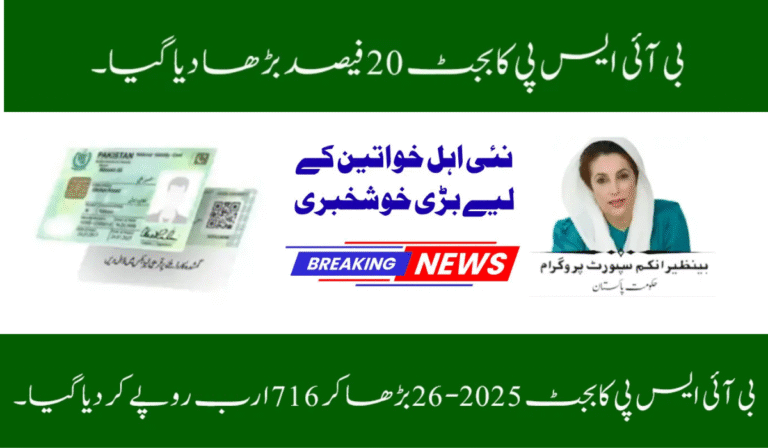
As someone who has witnessed how even a small financial uplift can change the daily reality of low-income households, I see the new BISP budget increase as more than just numbers. It represents stability for families juggling utility bills, rising food prices, and the never-ending cost of living in Pakistan. With the government announcing a 20% hike, the expansion is not only about quarterly stipends but also about reshaping how families experience relief during these tough economic times.
How the BISP Budget Boost Will Help Low-Income Families
For a family living paycheck to paycheck, even an additional Rs. 1,000 per quarter can feel like a lifeline. The proposed jump from Rs. 13,500 to Rs. 14,500 per quarter means that beneficiaries will be able to cover essential expenses that have become overwhelming due to soaring inflation.
- Families can allocate more toward groceries and household needs.
- They may find it easier to pay off utility bills on time.
- Healthcare services that once felt out of reach can be accessed with less hesitation.
I have personally seen how these stipends make a difference. A neighbor once told me she could finally afford school uniforms and supplies for her children because of a small stipend increase. That single gesture transformed her children’s school attendance record.
The government’s plan to tie stipends to a dynamic mechanism linked with inflation ensures that the financial assistance remains relevant and impactful, preventing families from slipping further behind as challenges persist.
The Future of Payments: Digital Payments for Transparency and Accessibility
One of the most impressive changes is the push for digital systems. Instead of waiting in long queues at distribution centers, recipients will now receive stipends directly into their bank accounts, wallets, or even through ATMs.
This shift ensures:
- Smoother and faster disbursement of funds.
- A transparent process with reduced chances of corruption.
- Improved control over finances for unbanked families, who will now step into the formal financial system.
I remember assisting an elderly woman who struggled to collect her cash because of middlemen interference. With biometric systems and mobile banking options, her experience would be entirely different—faster, fairer, and more empowering.
The 2025–26 budget marks a new era where digital payments not only distribute money but also nurture long-term inclusion and financial independence.
Continued Support for 10 Million Families Across Pakistan
The BISP budget is not shrinking in reach—it still targets approximately 10 million families, which accounts for a large portion of Pakistan’s population. Many of these households rely on this stable income for survival.
- Vulnerable households depend on food aid and school supplies.
- Conditional transfers (CCTs) encourage families to prioritize children’s futures by ensuring school attendance.
- Regular health checkups become achievable when linked to immediate relief.
This focus on sustainable alleviation of poverty goes beyond cash handouts. It’s about fostering long-term development and breaking cycles of deprivation.
Strengthening Pakistan’s Social Safety Net
The government’s commitment extends beyond financial assistance. The idea is to strengthen a comprehensive social safety net that helps with child nutrition, girls’ education, and broader healthcare access.
The constant updating of the National Socio-Economic Registry (NSER) ensures that only the most deserving families remain enrolled, and those wrongly included are excluded. This approach addresses the root causes of poverty—such as lack of jobs, services, and equal opportunities—while empowering marginalized communities.
What’s Changing in the 2026 BISP Budget?
The fiscal year 2025–26 ushers in notable updates:
- 20% hike in the budget, raising it from Rs 592 billion to Rs 716 billion.
- Quarterly stipends adjusted to Rs. 14,500.
- Broader coverage nationwide, reaching millions more.
- Launch of enhanced programmes for education, health, and nutrition.
- Implementation starting January 2026.
I see this as more than just money—it’s an impactful reform with ripple effects across communities.
Why Is This Increase Happening?
The reasons are grounded in reality:
- Inflation protection: As food, fuel, and transport costs surge, families struggle to cover essential needs.
- Poverty reduction: Expanded stipend coverage aims to push families above the poverty line.
- Social stability: By ensuring income stability, the program prevents unrest during times of hardship.
- Global commitments: International partners like the World Bank and IMF emphasize strengthening social protection for women and children.
It reminds me of the pandemic years when emergency programs made the difference between survival and starvation for many households.
Who Will Benefit from the 2026 Increase?
The increase will directly touch lives of:
- Women-led households who have little to no income.
- Rural families affected by seasonal unemployment.
- Urban workers crushed under high expenses.
- Families receiving education incentives for their children.
- Mothers and infants accessing nutrition programmes.
The face of poverty is often female, and this budget acknowledges that by channeling direct payments to women for stronger decision-making within households.
Historical Budget Growth of BISP
Looking at the numbers, the BISP budget has grown steadily:
- 2010–11: ~70 billion, expansion of conditional cash transfers.
- 2015–16: ~102 billion, launch of digital pilots.
- 2020–21: ~180 billion, COVID-19 emergency support.
- 2023–24: ~470 billion, inflation-linked stipend increase.
- 2025–26: ~716 billion, a 20% hike with stipends raised to Rs 14,500.
These milestones reflect how the program adapts to Pakistan’s changing economic climate.
Key Reforms with the 2026 Budget
The new budget emphasizes conditional cash transfers tied to education, health, and nutrition.
- Extra funds for keeping children in school.
- Bonuses for families completing health checkups.
- Ongoing support through the Nashonuma programme.
On the technology front:
- Wider digital systems with partnerships across banks.
- Stronger biometric access to curb fraud.
- Mobile banking for remote communities.
- Public dashboards, real-time monitoring, and independent audits for greater integrity.
These steps push the program toward greater transparency and reliability.
Economic Context – Why Now?
The timing couldn’t be more critical. Pakistan continues to face rising inflation, with essentials like food, electricity, and fuel stretching household budgets thin. The budget shield provides families with a measure of purchasing power, offering economic resilience and broader inclusion.
How and When Will Beneficiaries Receive the Increase?
The government has made the process simple:
- No reapplication required—just keep records updated.
- First increased payments from January 2026.
- Accessible through banks, ATMs, wallets, and centers.
- Updated NSER details will prevent delays.
For many, this means relief without bureaucracy, a rare but welcome experience.
Projected Impact on Households
The additional Rs. 1,000 per quarter might seem small, but when combined with CCT incentives, it translates to 12–15% yearly assistance growth. Families can:
- Pay off utility bills more comfortably.
- Cover groceries for an extra month.
- Afford school uniforms and supplies.
- Access basic healthcare services without hesitation.
In my own observations, these increments often determine whether a family has three meals a day or struggles with hunger.
Challenges in Implementation
The program, however, is not free from hurdles:
- Inflation may outpace the value of the increase.
- Remote and unbanked communities still require better logistics.
- Strong fraud prevention using biometric systems remains essential.
These are issues that policymakers will need to monitor continuously.
Alignment with Pakistan’s Welfare Strategy
Finally, the 2026 budget aligns with larger national and global goals:
- Supporting the Sustainable Development Goals (SDGs), especially poverty reduction and hunger elimination.
- Promoting women’s empowerment through direct payments that enhance household decision-making.
- Maintaining consumer spending and stability during difficult times.
In my experience, when women control the flow of resources, the entire family benefits, making this reform deeply meaningful.
Conclusion
The 20% hike in the BISP budget is more than a financial adjustment—it is a lifeline for millions of vulnerable households across Pakistan. By raising quarterly stipends to Rs. 14,500, linking support to inflation, and expanding digital systems, the government is ensuring that families can withstand economic shocks with dignity. The continued focus on education, health, and nutrition programmes reflects a strategy that goes beyond survival to foster long-term development. With 10 million families set to benefit, the impact will be felt not only at the household level but also across Pakistan’s broader social safety net.
FAQs
How much will the new BISP quarterly stipend be in 2025–26?
Beneficiaries will receive Rs. 14,500 per quarter, starting from January 2026.
Do families need to reapply for the new BISP payments?
No. Current beneficiaries don’t need to reapply. They just need to keep their NSER records updated to avoid delays.
How many households will benefit from the 2026 BISP increase?
The program is expected to support over 10 million families nationwide, including women-led households and those facing seasonal unemployment.
What are the main reforms in the 2026 BISP budget?
The key reforms include digital payment systems, stronger biometric fraud prevention, expanded conditional cash transfers for education, health, and nutrition, and enhanced transparency through real-time monitoring and audits.
Why did the government raise the BISP budget by 20%?
The hike is meant to protect households from inflation, reduce poverty, maintain social stability, and align with global commitments from the World Bank and IMF to strengthen Pakistan’s social protection system.