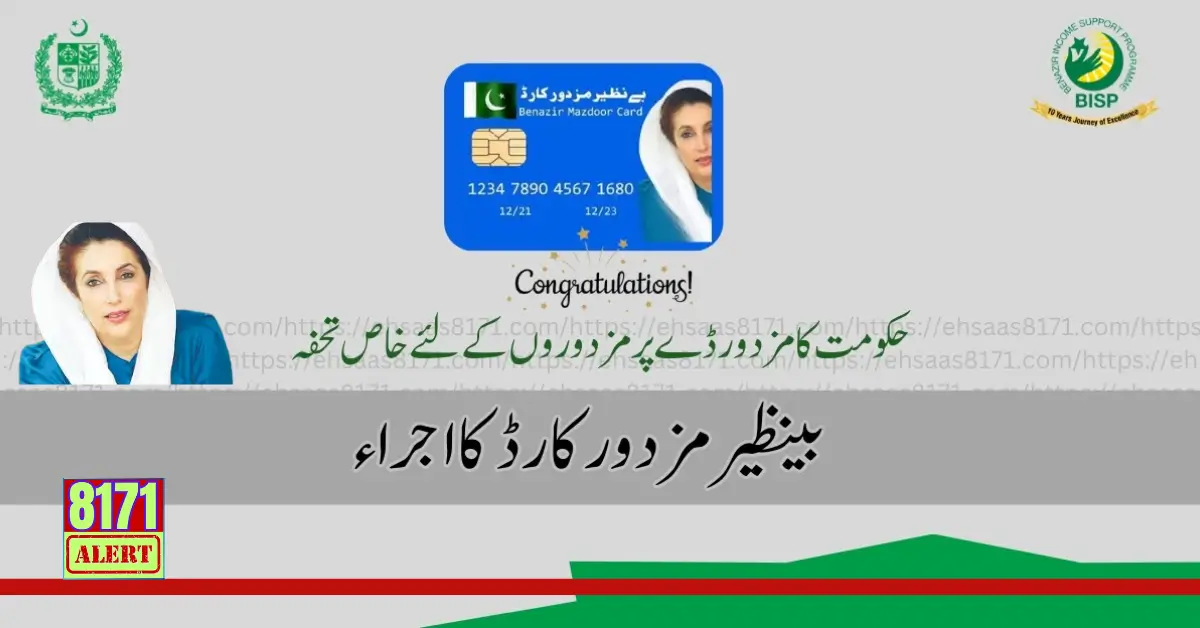
In 2025, the Benazir Mazdoor Card continues to serve as a cornerstone in Pakistan’s efforts to provide financial relief and social support to labourer, daily wage, and informal worker communities. Having observed many workers struggle with rising living costs and limited access to government assistance, I can say firsthand how initiatives like these help in improving the quality of life for vulnerable families.
The 2025 Benazir Mazdoor Card is part of broader Government Programs Relevant to Workers, designed to ensure equitable distribution of aid, education support, and healthcare access. Let’s explore the details.
Key Features of the Benazir Mazdoor Card
The Benazir Mazdoor Card offers multiple benefits designed to stabilize the economic situation for families of labourers:
- Monthly cash assistance to cover essentials like food, rent, and utilities.
- Access to healthcare through selected hospitals, offering subsidized or free treatment.
- Education Wazaif for children of cardholders, integrated with Benazir Taleemi programs.
- Smart ATM functionality allows funds to be withdrawn easily from ATMs using biometric verification.
- Alignment with other initiatives like Benazir Undergraduate Scholarship, Kafalat, and Ehsaas Rashan Program.
In my experience, the smart ATM feature has made disbursement seamless, reducing dependency on intermediaries and minimizing delays in receiving financial aid. Workers also report increased peace of mind knowing that their families are covered for basic essentials and emergencies.
Eligibility Criteria for the Mazdoor Card
To ensure that the benefits reach those who need them most, applicants must meet certain criteria:
- Must be a labourer, daily, wage, or worker in the informal sector including construction, masons, porters, rickshaw, drivers, domestic, and helpers.
- Monthly income should be Rs. 30,000 or less to target economically vulnerable households.
- Should not receive any government salary, ensuring the non-government workers are prioritized.
- Must be registered with BISP or pass.gov.pk, and complete CNIC validation and registration processes.
- Beneficiaries are encouraged to be aware of related support programs such as scholarships, undergraduate, students, bisp, and ehsaas programs.
These eligibility requirements not only ensure fairness but also provide a legal and financial identity to informal workers, a group often overlooked in conventional systems.
How to Apply for the BISP Mazdoor Card – Step-by-Step
Applying for the Benazir Mazdoor Card is straightforward but requires careful documentation:
- Visit the nearest BISP or Labour Office to confirm eligibility and obtain the registration form.
- Submit your CNIC along with income proof, including a certificate or wage slip.
- Complete biometric verification via NADRA, including thumbprint authentication.
- Some provinces provide digital registration through a mobile app for self-enrollment.
- Confirmation and card issuance follow verification. Applicants can collect or await delivery.
- Check pss.gov.pk for online registration, status, and updates.
From personal observation, workers who follow these steps diligently often receive their cards within weeks, and they start benefitting from financial support immediately. Many first-time applicants initially feel overwhelmed by paperwork, but once guided through the process, the system proves very efficient.
Objective of the Mazdoor Card Scheme
The Benazir Mazdoor Card is not merely a financial tool but a system aimed at uplifting informal workers:
- Provide relief amid inflation and rising costs.
- Offer economic assistance to families, helping with education and healthcare.
- Recognize the contribution of informal workers, granting legal and financial identity.
- Boost the economy by formalizing the support system, enhancing quality of life.
- Support scholarships for poor students in Balochistan and other marginalized regions.
Many workers I’ve spoken with describe the program as life-changing, especially for single-parent households and elderly workers, as it provides both security and dignity.
Availability Across Provinces
Initially launched in Sindh, the Mazdoor Card program has expanded to other provinces such as Punjab, Balochistan, and Khyber Pakhtunkhwa.
- Sindh Employees’ Social Security Institution (SESSI) runs awareness campaigns to encourage more eligible workers to enroll.
- The program now connects workers in remote areas to government support efficiently.
This expansion ensures that more families across Pakistan can access financial aid, education, Wazaif, and healthcare, significantly reducing regional disparities.
Other Government Programs Relevant to Workers in 2025
While the Benazir Mazdoor Card is central, several other programs complement it:
- Benazir Income Support Programme (BISP): Provides quarterly financial assistance to vulnerable families, increasing to Rs. 13,500 in January 2025.
- Punjab Ration Card Program 2025: Launched by Chief Minister Maryam Nawaz, gives Rs. 3,000 monthly via digital smart card to low-income households for kitchen expenses.
- Benazir Hunarmand Program 2025: Offers vocational training for unemployed youth aged 18–40, registered with BISP Dynamic Registry.
- Punjab Parwaz Card 2025: Supports residents aged 18–45 seeking vocational, technical, caregiving, or soft skills for opportunities abroad.
- Asaan Karobar Finance Scheme 2025: Provides interest-free loans to new ventures or existing businesses, boosting entrepreneurs financially.
- Integration with ehsaas, Kafalat, and other provincial programs creates a holistic support network for informal workers.
I have personally seen how these programs help workers diversify their income streams and build long-term security, especially when combined with skills training initiatives.
How to Get Information or Apply
For those looking to benefit from these programs:
- Visit the BISP Website or for updates on programs and eligibility.
- Contact the Helpline at 0800-26477 for guidance.
- Recheck status using the 8171 online system or at a BISP Tehsil office for verification.
- Applications for Benazir Hunarmand and Punjab Parwaz programs are often available through dedicated portals on the Benazir Income Support Programme website.
Staying informed is crucial. I’ve observed that workers who proactively check status and updates often access financial aid faster and maximize benefits for their families.
Additional Benefits and Real-Life Impact
The Benazir Mazdoor Card empowers informal workers in ways beyond financial assistance:
- Encourages education among children of cardholders, creating long-term change.
- Provides access to healthcare that would otherwise be out of reach.
- Recognizes the efforts of daily wage workers and their role in sustaining the economy.
- Reduces dependence on middlemen for cash assistance, improving transparency.
- Creates opportunities for entrepreneurs through interest-free loans, helping families start new ventures and sustain existing businesses.
Workers I have interacted with often express relief and pride after receiving their card, describing it as a tool that restores dignity while providing tangible support.
Final Thoughts
The 2025 Benazir Mazdoor Card is more than just a financial assistance tool—it represents recognition, support, and opportunity for labourer, daily, wage, and informal worker communities. By providing monthly cash support, access to healthcare, and education Wazaif for children, the program ensures that families can navigate rising costs and focus on long-term stability.
From my experience observing these initiatives, the smart ATM functionality and biometric verification have made the distribution process transparent, quick, and reliable, giving informal workers the dignity and control they deserve. Programs like Benazir Hunarmand, Punjab Parwaz Card, and the Asaan Karobar Finance Scheme complement the card by offering skill development, international employment opportunities, and support for entrepreneurs, expanding the benefits beyond immediate financial aid.
For any worker, staying registered with BISP and following the online registration, status, and updates ensures timely access to these benefits. Overall, the Benazir Mazdoor Card not only boosts the economy but also empowers individuals, encourages education, and strengthens families, marking a significant step forward in social protection for vulnerable families across Pakistan.
FAQs
1. What is the 2025 Benazir Mazdoor Card?
The Benazir Mazdoor Card is a Government initiative to provide financial assistance, healthcare access, and education Wazaif to labourer, daily wage, and informal worker families. It ensures support for vulnerable households through a smart ATM system.
2. Who is eligible for the Mazdoor Card?
Eligibility includes labourer, daily, or wage workers in the informal sector, such as construction, masons, porters, rickshaw drivers, domestic helpers, with a monthly income of Rs. 30,000 or less and not receiving any government salary. Applicants must be registered with BISP or pass.gov.pk.
3. What benefits does the card provide?
Benefits include monthly cash assistance, healthcare at selected hospitals, education Wazaif for children, and easy access to funds via ATM biometric verification.
4. How can I apply for the Mazdoor Card?
Applicants must visit the nearest BISP or Labour Office, submit CNIC and income proof, complete biometric verification through NADRA, and follow online or app-based registration for self-enrollment.
5. Where is the Mazdoor Card available?
Initially launched in Sindh, the program is now active in Punjab, Balochistan, and Khyber Pakhtunkhwa, with awareness campaigns by SESSI to ensure eligible workers enroll.
6. Can children benefit from the card?
Yes, children of cardholders can receive Wazaif education under the Benazir Taleemi programs, supporting poor students in marginalized regions.
7. Are there additional programs linked to the card?
Yes, programs like Benazir Hunarmand, Punjab Parwaz Card, Asaan Karobar Finance Scheme, and Ehsaas Kafalat complement the card by offering skill training, entrepreneurship support, and employment opportunities abroad.
8. How can I check the card status?
Use pss.gov.pk for online registration or the 8171 online system, or visit a BISP Tehsil office to recheck status and verify updates.
9. Is the card only for non-government workers?
Yes, the card targets non-government workers to ensure that financial assistance reaches informal sector families.
10. How does the card improve daily life?
The card provides immediate relief from inflation, ensures funds for food, rent, and utilities, supports education, and promotes economic growth, thereby boosting the quality of life for vulnerable families.